

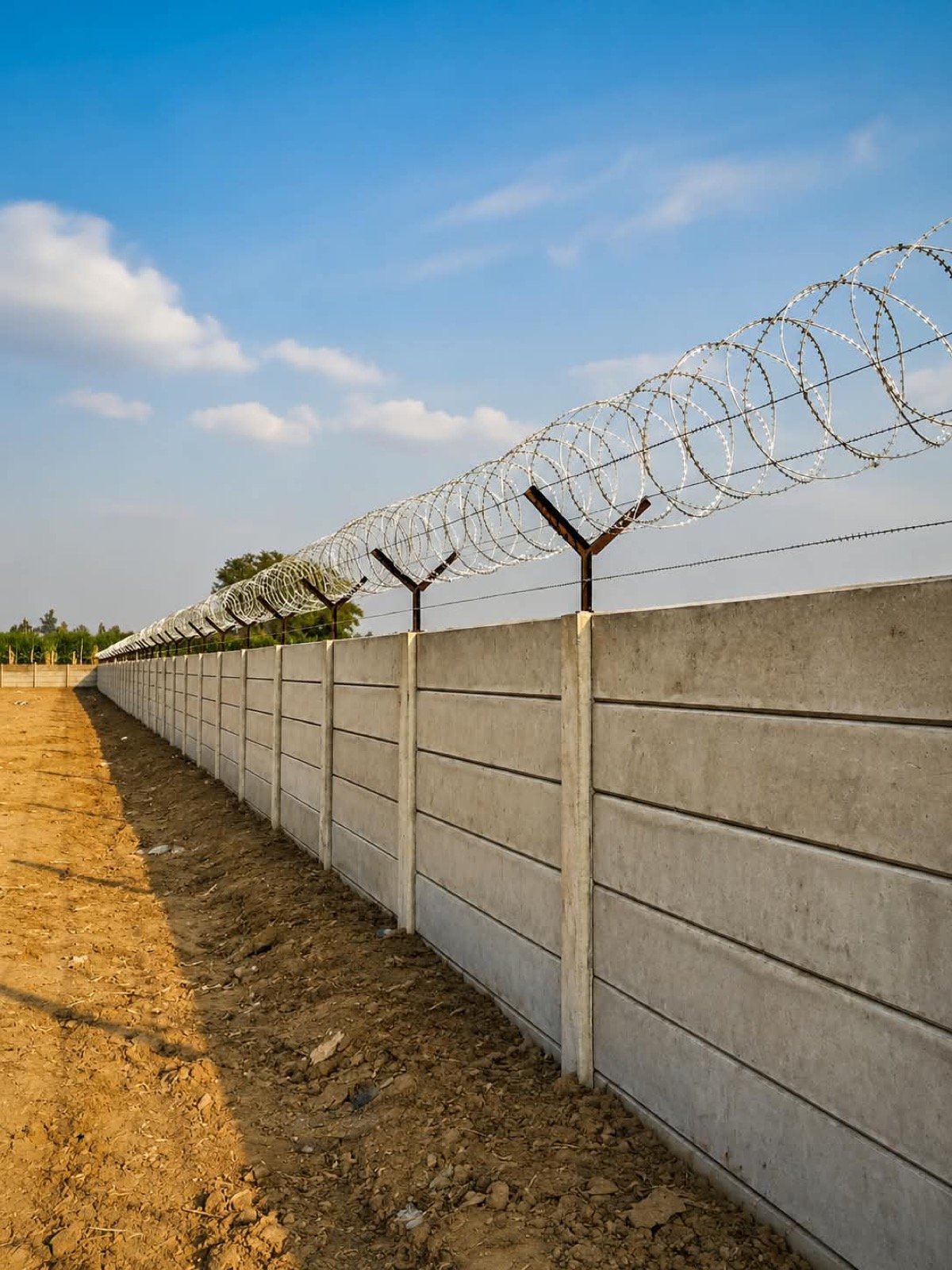


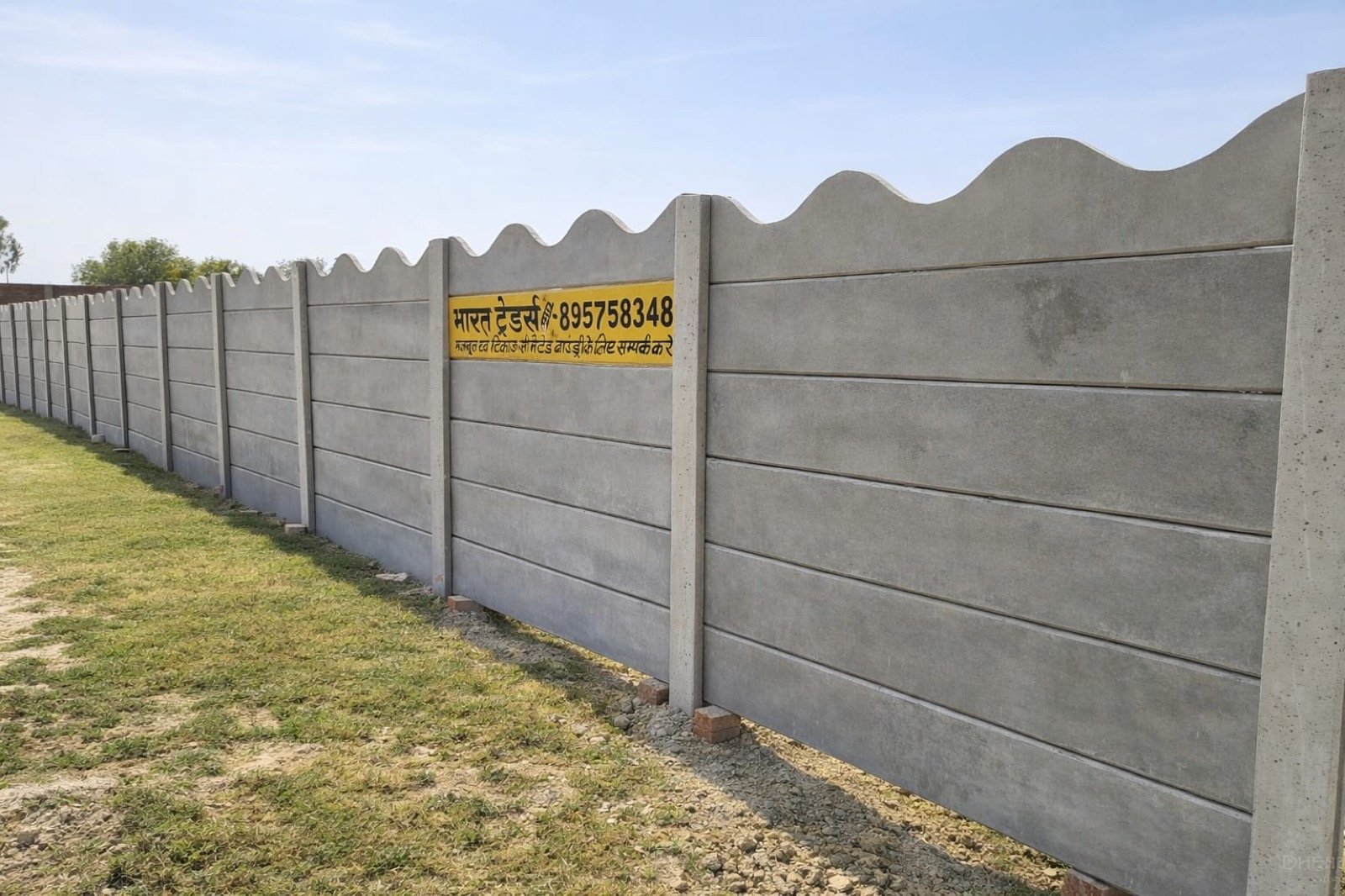
Most boundary walls in Uttar Pradesh are either brick walls or precast RCC walls. Both can last for years. The right choice depends on the length of the wall, your budget, how soon you need it and how it should look.
How a precast wall is built
Pillars and panels are cast in moulds at a yard and cured there. At site, pillars are set in pits filled with PCC every 6 ft, and the panels slide into grooves in the pillars. There is no brickwork, no plaster and almost no curing at site.
How a brick wall is built
A trench is dug along the full length, a footing is laid, bricks are laid in mortar, and the wall is cured and plastered. Long walls also need columns or piers at intervals.
Side by side
- Time: precast takes a few days at site; brick takes weeks
- Cost: precast is usually cheaper on long walls because there is no full length foundation and no plaster
- Water: precast needs very little; brick needs daily curing
- Looks: brick can be finished in many ways; precast comes plain or in designer panels
- Changes later: a precast wall can be opened and refitted; a brick wall has to be broken
When brick still makes sense
For a short front wall where a particular finish is needed, or where the wall also holds back earth, a designed brick or RCC wall may be better. For plots, farms, factories and long boundaries, precast is the practical choice.
Not sure? Book a site visit. We measure the boundary and explain both options with a written rate for the precast wall.
This article is general guidance. Site conditions and your own engineer’s advice come first.
